Cybersecurity threat intelligence or cyber threat intelligence (CTI) includes the collection, processing, and analysis of data to understand the motives, targets, and tactics of cyber threat actors. This essential practice enables rapid, security-focused decision-making, shifting our approach from reactive to proactive in combating cyber threats with the help of a Threat Intelligence Platform.
Why is Threat Intelligence important?

Threat intelligence in cyber security, also known as cyber threat intelligence (CTI), is detailed, actionable threat information utilized to prevent and fight cyber threats targeting individuals, governments, and enterprises of all sizes.
A Threat Intelligence Platform employs security teams by making them proactive and enabling them to take the proper or effective data-driven actions to prevent cyberattacks before they occur.
This also helps companies detect, analyze, and respond to cyber-attacks faster. Cybersecurity analysts create threat intelligence by collecting raw threat information and security-related information from different sources and then correlating and analyzing the data to uncover trends, patterns, and relationships that provide an in-depth understanding of actual or potential threats.
The importance of security intelligence lies in its ability to transform raw data into actionable insights that enhance cybersecurity defenses.
In general, Cyber threat intelligence offers companies valuable information about the latest threats, the attackers behind them, and their methods or techniques.
With this information and a Threat Intelligence Platform, companies can better allocate cybersecurity resources while ensuring their teams feel confident that the organization is fully protected and can operate efficiently.
What are the Three Types of Threat Intelligence?
There are different types of cybersecurity intelligence, ranging from broad, non-technical insights to specific technical information regarding distinct cyber threats. Here are the categories of threat intelligence that a Threat Intelligence Platform can help manage:
- Strategic Threat Intelligence: This form of cyber threat intelligence provides an elevated perspective, placing the threat within a broader context. It comprises non-technical data suitable for presentation to a board of directors. An instance of strategic threat intelligence is a risk assessment examining how a business decision could expose the organization to cyber threats, and this can be streamlined by a Threat Intelligence Platform.
- Tactical Threat Intelligence: Tactical threat intelligence centers on malicious actors’ tactics, techniques, and procedures (TTPs). It offers a glimpse into potential attack methods and how these adversaries might infiltrate an organization’s IT infrastructure. Tactical threat intelligence is harnessed by security operations centers (SOCs), IT managers, network operations centers (NOCs), and other experienced IT personnel to thwart cyberattacks proactively with the support of a Threat Intelligence Platform.
- Operational Threat Intelligence: Operational threat intelligence constitutes data that an IT department can leverage in proactively responding to a particular threat. It encompasses details regarding the attackers’ motives, the characteristics of the attack, and the timing of the assault. Ideally, this information is sourced directly from the threat actors, which can be challenging without a Threat Intelligence Platform.
Threat Intelligence Lifecycle
Cyber security threat intelligence systematically collects, analyzes, and uses threat intelligence to enhance cybersecurity. It involves several stages, each contributing to a more robust understanding of cyber threats and how to mitigate them effectively, often with the use of a threat intelligence platform.

Here are the key stages of the Threat Intelligence Lifecycle:
Phase-1: Planning and Direction
This initial stage involves setting the objectives and goals of your threat intelligence program. It includes defining what kind of threats you want to monitor, which assets need protection, and what outcomes you aim to achieve. This is typically facilitated by a Threat Intelligence Platform.
Phase-2: Data Collection
In this phase, you gather raw data from various sources. These sources include Open-Source Intelligence (OSINT), information-sharing communities, government agencies, internal logs, and more. The data can be Indicators of Compromise (IoCs), threat reports, news articles, etc., which are efficiently handled by a Threat Intelligence Platform.
Phase-3: Processing and Normalization
Collected data often comes in different formats and structures. In this stage, you standardize and normalize the data to make it consistent and usable. This includes converting timestamps, categorizing data, and ensuring data quality. A Threat Intelligence Platform assists in this.
Phase-4: Analysis
Cybersecurity experts analyze the normalized data to identify patterns, trends, and potential threats. They assess the relevance of the data to the organization, the context in which it applies, and the potential impact of the threats. A Threat Intelligence Platform aids in automating parts of this process.
Phase-5: Dissemination
The threat intelligence reports are shared with relevant organizational stakeholders. This includes IT and security teams, executives, and other personnel responsible for implementing security measures. Dissemination is often automated or facilitated through a Threat Intelligence Platform.
Phase-6: Feedback and Evaluation
Continuous improvement is essential. This phase involves collecting feedback from security operations, incident response, and other relevant teams to assess the effectiveness of the threat intelligence program. Adjustments are made based on this feedback. The Threat Intelligence Lifecycle is a continuous process supported by a Threat Intelligence Platform that helps organizations stay ahead of cyber threats, adapt to changing circumstances, and protect their digital assets effectively.
How do you use Threat Intelligence?
Threat intelligence is used in various ways to enhance an organization’s cybersecurity posture. A Threat Intelligence Platform is critical for integrating threat intelligence into these areas:
- Threat Detection:
Threat intelligence is employed to identify and detect potential cyber threats by analyzing patterns and indicators of compromise (IOCs), allowing for early identification of malicious activities or vulnerabilities. A Threat Intelligence Platform makes this process more efficient.
- Incident Response:
Threat Intelligence (TI) provides actionable insights during a security incident, aiding in understanding the nature of the attack, its origin, and its methods. It improves response strategies and reduces response time. A Threat Intelligence Platform supports faster incident response.
- Vulnerability Management:
TI assists in identifying and prioritizing vulnerabilities based on current threat trends. This enables enterprises to patch or mitigate the most critical vulnerabilities first, a process streamlined by a Threat Intelligence Platform.
- Risk Assessment:
Threat intelligence enhances understanding of the threat landscape, allowing companies to assess the risks associated with specific threats and prioritize their security measures accordingly. A Threat Intelligence Platform helps simplify risk assessment tasks.
- Threat Hunting:
TI enables proactive searching for potential threats within an organization’s network by analyzing patterns and anomalies that may indicate malicious activity. A Threat Intelligence Platform enables real-time threat intelligence to assist in this process.
- Strategic Planning:
Threat intelligence assists in aligning security strategies with the current threat landscape, ensuring that resources are allocated effectively to address the most pressing threats. A Threat Intelligence Platform plays a crucial role in this alignment.
- Awareness Training:
TI provides context and real-world examples for training employees to recognize and respond to cyber threats, improving overall security awareness. Training programs are often enhanced through a Threat Intelligence Platform.
How do you build a cyber threat intelligence plan?
If you’re ready to build a cyber threat intelligence plan to safeguard your organization, follow this straightforward guide, which outlines the six essential steps. A Threat Intelligence Platform plays a crucial role in each of these steps:
Step 1: Identifying Potential Threat Sources
Recognizing where cyber threats originate is crucial for defense. Collaborate with security teams and use cybersecurity platforms to detect patterns indicating potential threats, such as phishing, malware sites, spoofed websites, and rogue insiders. This enhances your overall security posture. A Threat Intelligence Platform helps automate this step.
Step 2: Intelligence Collection
After identifying potential threats, gather actionable intelligence. Use a combination of open-source intelligence (OSINT) tools, industry feeds, and proprietary platforms to collect detailed data. Ensure your InfoSec team has the latest insights to progress with current intelligence. A Threat Intelligence Platform simplifies data collection.
Step 3: Analyzing Data
Once you’ve collected intelligence, it’s crucial to analyze it effectively. Work closely with teams for insights into potential financial vulnerabilities and anomalies. Utilize advanced analytics tools to examine the data, uncovering patterns or irregularities. This phase turns raw data into actionable insights, helping you understand the context and significance of the threats. A Threat Intelligence Platform streamlines the analysis process.
Step 4: Strategy Development
With insights in hand, develop a robust security strategy. To build a strong defense, create countermeasures like advanced authentication, strict access controls, and encryption. Recognize that no defense is foolproof, so include incident response plans to address breaches swiftly. Given the evolving nature of cyber threats, your strategy must be adaptable, with regular updates based on insights from the Threat Intelligence Platform.
Step 5: Execution
A strategy’s success hinges on its execution. Implement your plans by addressing software vulnerabilities, deploying advanced intrusion detection systems, and ensuring effective coordination between digital, fraud, and security teams. A Threat Intelligence Platform helps fortify vulnerable systems and ensures real-time detection.
Step 6: Ongoing Monitoring and Enhancement
Cyber threats evolve rapidly, so what works today might not work tomorrow. To keep your defenses strong, continuously monitor and refine your cyber threat intelligence framework through regular audits, system checks, and feedback loops. A Threat Intelligence Platform ensures that this process is efficient and helps organizations stay ahead of threats.
How do Threat Intelligence Feeds help protect my organization?
The threat data and information contained in the Cyble Threat Intelligence Feeds enable you to determine the potential risk to your assets, employees, or network devices.
By gaining exposure insight with contextual data, you can promptly take remedial actions such as restricting unauthorized access to accounts and devices. A Threat Intelligence Platform helps manage and process these feeds effectively.
How to Implement Threat Intelligence Tools and Services?
Threat intelligence tools and services are crucial in proactively identifying vulnerabilities and potential threats before they attack. By leveraging a Threat Intelligence Platform, you can make informed decisions on various security measures, such as deploying appropriate security tools to address critical threat vectors, restricting permissions or access controls to thwart known attacks, and identifying necessary patches or updates for vulnerable systems.
Additionally, threat intelligence aids in classifying risky activities and incidents, facilitating early detection and more effective response strategies.
Integrating these into automated response processes enhances your ability to predict attack patterns and recommend the most effective counteractions. Automated responses ensure you can detect and address threats as swiftly as possible, often with the help of a Threat Intelligence Platform.
What is a Threat Intelligence Feed?
A Threat Intelligence Feed or IT feed is continuous streaming for data related to a company’s potential or current threat. TI feed offers information on cyber threats such as malware, zero-day attacks, and other security threats. Threat intelligence feed is a vital component of security infrastructure that aids in identifying and preventing security breaches.
Both threat intelligence feeds, and threat feeds are real-time data monitoring that collect cyber threat intelligence. The significant difference between the two is that threat feeds gather comprehensive data and provide it to a secure team through reports and live views. On the other hand, a threat intelligence feed offers indicators of compromise, such as digital forensics, that suggest that a file or network may have been compromised. It helps security teams focus on the most urgent issues and alerts.
Who Benefits from Threat Intelligence Tools?
Threat intelligence provides various benefits to organizations regardless of their size. It helps by processing threat intelligence data to understand the attacker’s motives, respond to the specific incident, and proactively anticipate the threat actor’s next move.
For small and medium enterprises, Threat intelligence helps them maintain a good level of protection that would be out otherwise.
Companies with substantial security teams can decrease the cost and required skills by leveraging external threat intelligence and making their analyst more effective. Threat intelligence provides various advantages to different security team members as mentioned below:
| Functions | Benefits |
| Security/IT Analyst | Enhance prevention and detection methods and fortify defenses. Focus on incidents according to their risk and organizational impact. |
| Security Operations Center (SOC): | Focus on incidents according to their risk level and impact on the organization. |
| Computer Security Incident Response Team (CSIRT) | Speed up the investigation, management, and prioritization of incidents. |
| Intelligence Expert | Identify and monitor threat actors targeting the organization. |
| Executive Management | Comprehend the risks the organization encounters and explore the options to mitigate their impact. |
What is a threat intelligence management system?
Threat intelligence management is a structured approach to gathering, analyzing, and sharing information about an organization’s potential cyber threats and risks. This process involves collecting data, analyzing it for relevance and accuracy, and disseminating actionable insights to improve security.
Security teams leverage this intelligence to anticipate and counteract digital threats. However, they face significant challenges due to the overwhelming volume and diverse formats of threat data. Effective management requires robust tools and methodologies to filter the noise and extract meaningful insights.
What are the common Indicators of Compromise (IOCs)?
Security professionals frequently detect signs of an ongoing or past attack by scrutinizing areas where unusual activities are evident. Artificial intelligence can significantly assist in this endeavor.
Some typical Indicators of Compromise (IOCs) encompass:
Unusual Account Behavior:
Attackers frequently seek to elevate their account privileges or transition from a compromised account to one with greater permissions.
Login Irregularities:
Signs of trouble include after-hours login attempts to unauthorized files, rapid sequential logins from various global IP addresses to the same account, and failed login attempts from non-existent user accounts.
Unusual Database Read Activity:
A significant uptick in database read operations may signal the extraction of an abnormally large dataset, possibly involving sensitive information like credit card numbers.
Abnormal DNS Requests:
Elevated levels of DNS requests from a specific source or unusual patterns in DNS requests to external hosts can indicate potential external command and control traffic, suggesting an outsider’s involvement.
High Volume of Requests:
Repeated requests for the same file can indicate persistent cyberattacks. An instance where a file receives hundreds of requests may suggest exhaustive attempts to exploit vulnerabilities.
What to Look for in a Threat Intelligence Solution?
One of the first things you should consider while looking for a competitive Threat Intelligence Solution is the quality and scope of the data used. The data should be current and accurate, with regular, real-time updates. It should give you an overview of IoCs, TTPs, and other actionable data points your organization requires.
User Experience & Navigation:
The best threat intelligence in the world won’t matter much if the platform is not easy to navigate. Choose a Threat Intelligence Solution with a good user interface and ease of use, so infosec teams can easily navigate its features comfortably.
API Support and Integration:
Ensure that any Cyber Threat Intelligence solution you are considering offers good support for Integration with critical platforms and APIs.
Compatibility:
Another key point to remember is ensuring that the solution you adopt is compatible with your current security infrastructure, firewalls, and endpoints.
Compliance:
Based on your industry, you may need to comply with various regulatory requirements such as TAXII/STIX and others. Ensure that the solution you implement is compliant with these and other regulatory requirements specific to your region.
End-to-end support:
The final aspect to look for in a Threat Intelligence solution is the level and quality of support you can expect from the provider. Ensure that Service Level Agreements are appropriately drafted and agreed upon so your infosec team can promptly get the support it needs.
As highlighted in this article, Threat Intelligence holds immense significance for both individuals and organizations in today’s digital landscape.
Yet, the challenge lies in the intricate and vast nature of sourcing threat intelligence from the surface, deep, and dark web. This complexity often makes it a daunting task for individuals to acquire timely and actionable threat intelligence.
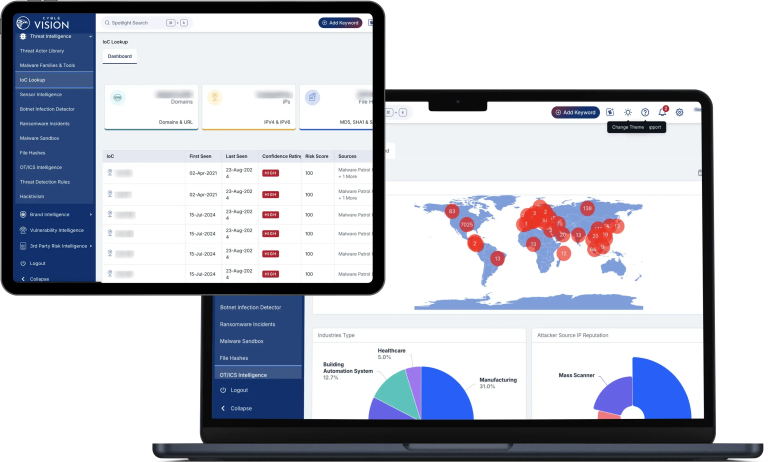
Fortunately, Cyble Vision is designed for exactly this purpose, using the power of AI to scan cybercrime forums, dark web chatter and other sources, giving your real-time Darkweb Monitoring, enabling you to implement security measures basis actionable threat intel.
Threat Intelligence Use Cases
Threat intelligence (TI) tools provide various use cases essential for proactively safeguarding business operations and cyber integrity.
Credential leakage:
Threat Intelligence tool helps to identify exposed usernames and passwords to prevent unauthorized access.
Threat Mapping:
TI enables the creation of a dynamic asset mapping framework to monitor an evolving digital footprint, which helps to identify potential attack vectors and exposure points. Automatically correlating threat-actor intelligence with an organization’s unique digital footprint is key to this process.
Brand Protection:
Security intelligence tools can mitigate reputational damage by monitoring domain and IP address spoofing, tracking valuable data sold on the dark web, defending against phishing scams, and protecting IT systems and reputations.
Attack surface monitoring:
Threat Intelligence tools can identify external-facing assets linked to known IP ranges or domain names, ensuring comprehensive discovery through scans that interact with exposed endpoint services and collect additional metadata such as SSL certificates, HTML links in HTTP responses, and service banners.
Enterprise Objectives for Cyber Intelligence Programs
Establishing clear enterprise objectives is crucial when developing a threat intelligence program. This process begins with defining the critical data, assets, and business processes that need protection and conducting a thorough impact analysis to understand the consequences of losing these assets.
This approach provides a clear roadmap for determining the necessary types of threat intelligence and identifying the key stakeholders involved.
Developing a robust threat intelligence program starts with aligning it with the broader enterprise objectives. This alignment ensures that the program is tailored to effectively protect the organization’s most valuable resources.
By clearly defining which data, assets, and business processes are critical to the organization’s operations and understanding the potential impact of their compromise, organizations can prioritize their threat intelligence efforts accordingly.
Threat Intelligence FAQs
What is Cyber Threat analysis?
Cyber threat analysis, also known as cybersecurity threat analysis, examines and evaluates various elements of cyber threats to understand their nature, scope, and potential impact on computer systems, networks, and data.
It involves systematically collecting, dissecting, and interpreting information related to cyber threats to support decision-making, risk assessment, and the implementation of effective security measures.
Who is a cyber threat intelligence analyst?
Cyber threat intelligence analysts, or “threat intelligence analysts,” are specialized information security professionals who leverage their expertise to collect, evaluate, and interpret threat data.
They create detailed intelligence reports shared with respective departments to inform and enhance organizational security. Their role is crucial in developing and maintaining effective threat intelligence programs.
Certification in cyber intelligence is often required to ensure that analysts have the necessary skills and knowledge to build and manage a comprehensive threat intelligence framework.
How does IoT affect threat intelligence?
Threat Intelligence plays a key role in the traditional proactive cybersecurity approach. It helps enterprises stay ahead of cyber adversaries by collecting, processing, and analyzing data from the deep, dark, and surface web to better understand cybercriminals’ potential motives, possible targets, and attack methods.
Using Cyble’s vulnerability management, you can understand which security weaknesses cybercriminals take advantage of. It supplies relevant and actionable information about both recognized and undiscovered vulnerability data, focusing on potentially susceptible OT and IoT technologies to speed up the risk evaluation and knowledge confirmation processes.
Cyble’s threat feed and IoC Management tool helps cybersecurity personnel in their cyber threat analysis by delivering comprehensive information backed by intuitive interfaces.
What is the future of threat intelligence?
The future of cyber threat intelligence (CTI) is anticipated to be shaped by adopting more advanced technologies and tools, including predictive analytics and automation.
These innovations will enhance the capability to swiftly foresee and respond to potential threats. Additionally, CTI is expected to integrate more seamlessly with other security tools, such as security information and event management (SIEM) systems, enabling a more holistic and comprehensive view of the threat landscape.
Furthermore, the advent of new technologies, like blockchain and quantum computing, will profoundly impact the evolution of CTI, offering new avenues for securing data and thwarting cyber threats. As these technologies develop, they will redefine the strategies and methodologies employed in threat intelligence, ensuring a more resilient cybersecurity infrastructure for organizations worldwide.
What are Advanced Persistent Threats (APT)?
An Advanced Persistent Threat (APT) is a continuous and targeted cyberattack in which cybercriminals gain access to a network and remain undetected for a significant period.
The goal of APT attacks is to steal sensitive information rather than cause damage to the company’s network. The motive of various APT attacks is to achieve and maintain ongoing access to the targeted network rather than to get in and out of the organization’s network.
APT attacks are executed manually with meticulous planning. As considerable effort and resources are spent on them, threat actors generally select high-level targets like large enterprises to steal sensitive data over the long run. Most APT attacks are planned and executed by well-funded nation-state cybercriminal groups.
Discover how we help proactively defend against evolving threats with Gen 3 intelligence. Request a Demo today!
Why is threat intelligence important in cybersecurity?
It helps organizations identify, understand, and respond to emerging threats, reducing risks and improving defenses against cyberattacks.
What are the types of threat intelligence?
Types of threat intelligence include strategic, tactical, operational, and technical intelligence, each addressing different levels of security needs.